A GoHighLevel alternative that isn't someone else's platform.
Pipelines, calendars, SMS and email sequences, a funnel or two — assembled inside an account you don't ultimately control, on pricing that scales with sub-accounts and contacts. We build the same machine as your own software, and the login belongs to you.
We build revenue software people own: an autonomous content and analytics platform for one client, and a custom dialer for another that replaced a $30,000-a-year subscription.
One of these options isn't a subscription
Another all-in-one platform.
The same rented account, the same monthly maths, and your contact list still living on infrastructure you don't own.
Your own stack, built once.
All-in-one is an excellent deal when you use all of it. Most businesses use a pipeline, a calendar and two automations — and pay every month for the ninety percent they opened once.
What we build instead of renting a platform
For one client we built an autonomous content and analytics platform: keyword research, long-form drafting in their voice, a multi-model review pass, scheduling, auto-distribution, and an analytics suite with heatmaps and funnel tracking. It runs their marketing, and they own every line of it.
For another we replaced a $30,000-a-year sales dialer with a custom one — proof that the revenue side of a business is buildable, not just the marketing side. Between the two, that's most of what an all-in-one platform rents you.
See the marketing platform we built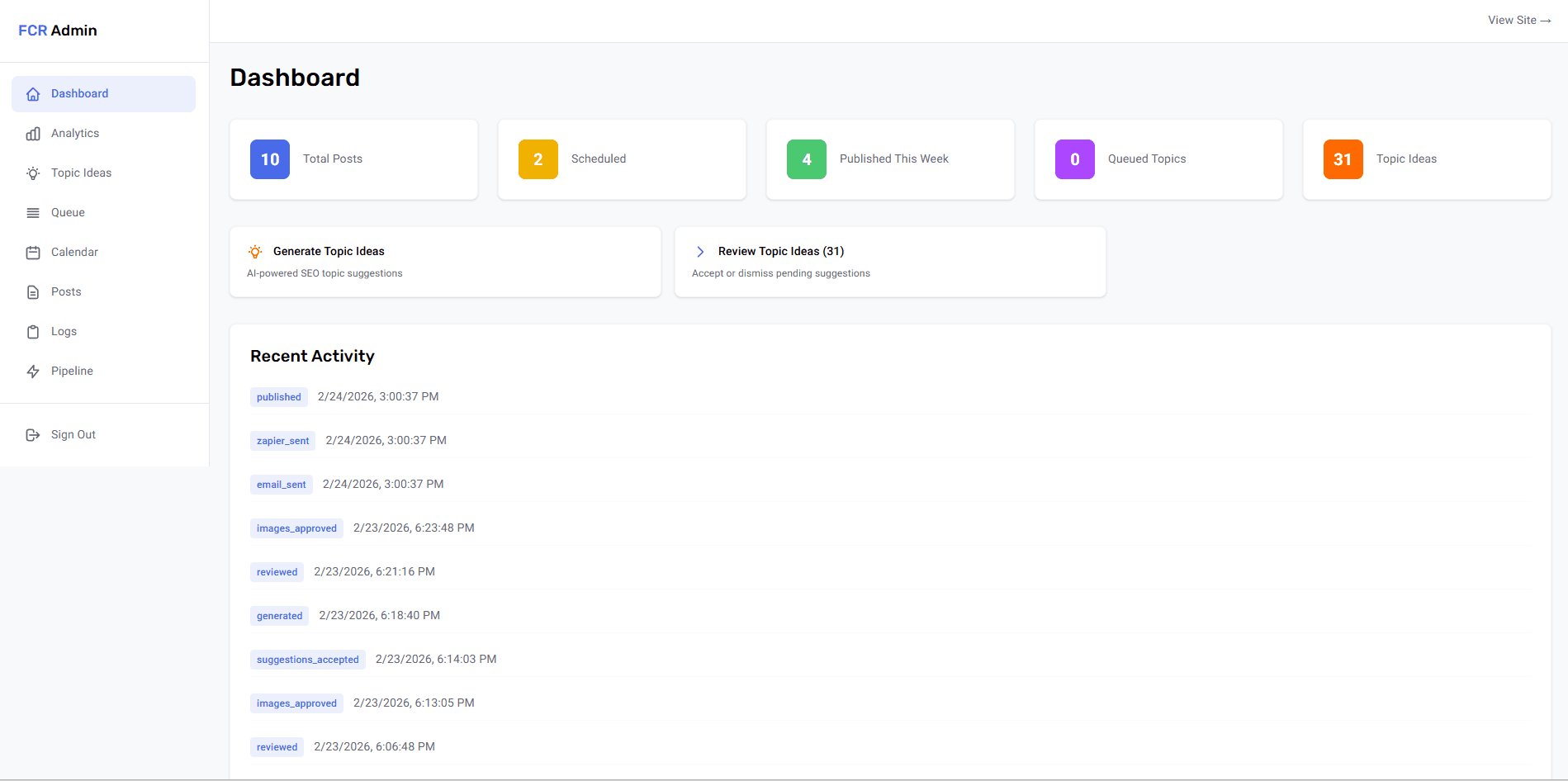
Ownership
Two ways to own it
Both end the same way — with software that belongs to you instead of a login you keep paying for.
Own it outright
One flat build fee. When it ships, the repositories, the accounts, and the documentation are handed to you. Run it on your own infrastructure, hand it to your own developer, change anything you want.
Own it, we run it
The same build and the same handoff, plus optional hosting, fixes, and updates so nobody on your team has to babysit it. Cancel any month you like and keep the software.
Either way, you own the code. The care plan is a convenience, never a leash.
Questions before you move off a platform
Can we get our contacts, pipelines and automations out?
Contacts, custom fields, pipeline stages and conversation history export cleanly. Automations don't transfer as files — they get rebuilt, which is usually an improvement, because half of them are experiments nobody has turned off.
Who sends the SMS and email once we're off it?
You do, through your own messaging and email accounts. Your sending reputation and your numbers stop being shared with strangers on a platform, and you see the real per-message cost rather than a credit balance.
We're an agency reselling sub-accounts. Does this work?
It changes the model rather than breaking it. Instead of reselling seats on someone else's platform at a margin, you own the product your clients use — which is a considerably better asset to be holding.
Do we have to cancel before you build?
No. Keep it running through the build and through a parallel period. Campaigns keep going out, nothing pauses, and you cancel once the new system has quietly taken over.
Is this right for a solo operator?
Probably not yet. If you're one person on a starter plan, the subscription is genuinely a bargain. This makes sense when the monthly bill is real and the platform is shaping your process instead of serving it.
Owning versus rentingAlso paying for Zendesk, Kixie or Aircall?
Most businesses are renting more than one. The argument is the same every time — and so is the fix.
Zendesk alternative
Tickets, macros, SLAs and the Monday report — built once, so seasonal agents cost nothing extra.
Own it insteadKixie alternative
The one we have already shipped: a $30,000-a-year Kixie plan, replaced by a dialer the client owns.
Own it insteadAircall alternative
Cloud phone systems all price per user, per month. Yours doesn't have to be one.
Own it insteadFind out what your own growth stack would cost.
Five questions, a genuine price range in about 60 seconds, and no email wall standing in front of it.
Or take a free 30-minute fit call. No card, no deck — mostly a conversation about which parts are actually worth owning.