The Aircall alternative that ends the per-seat bill.
Every cloud phone system on your shortlist prices the same way: per user, per month, plus the tier that happens to contain the one feature you needed on day one. We build the calling, routing, recording and reporting your team actually uses into software you own, running on telephony you buy at cost.
This is work we have already shipped. A custom dialer we built replaced a $30,000-a-year plan, went live in weeks, and is owned outright by the company that paid for it.
Two ways to replace Aircall
Sign with the next cloud provider.
A new logo on the invoice, the same per-seat line item, and a fresh round of porting paperwork in three years when that one gets expensive too.
Own the phone system.
The carrier minutes were never the expensive part — those are close to a commodity. What you are renting is the software wrapped around them, and software is the part we build.
We've built this exact thing before
A client was paying $30,000 a year for their calling platform. We rebuilt it as their own: power dialing across up to ten lines, call recording, voicemail drops, SMS, webhooks into the rest of their stack, and live reporting on connect rates and rep performance.
Weeks to live, owned outright, zero monthly licensing. A business phone system is the same engineering with a different shape on top — inbound routing and IVR instead of outbound volume.
See the calling platform we built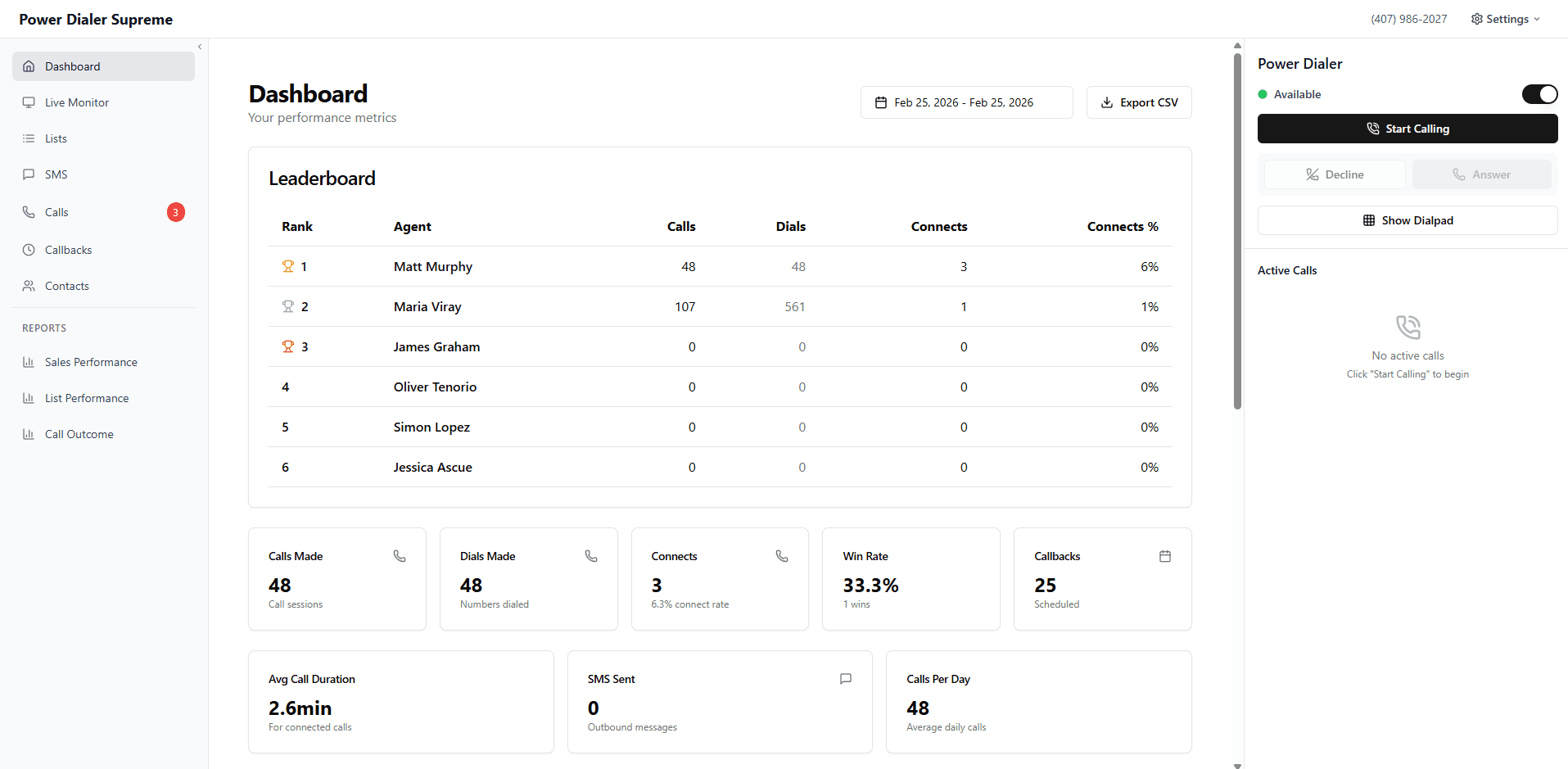
Ownership
Two ways to own it
Both end the same way — with software that belongs to you instead of a login you keep paying for.
Own it outright
One flat build fee. When it ships, the repositories, the accounts, and the documentation are handed to you. Run it on your own infrastructure, hand it to your own developer, change anything you want.
Own it, we run it
The same build and the same handoff, plus optional hosting, fixes, and updates so nobody on your team has to babysit it. Cancel any month you like and keep the software.
Either way, you own the code. The care plan is a convenience, never a leash.
What teams ask before they port
Can we keep our existing phone numbers?
Yes, in almost every case. We check portability with the carrier before a line of code is written, because that answer changes the plan. Porting itself happens last, after the new system has been running in parallel long enough that your team trusts it.
Where do call recordings and voicemails live?
In storage you control, under a retention policy you set rather than one attached to a plan tier. Nothing is locked behind a vendor's export button, and nothing quietly ages out because you downgraded.
Will it talk to our CRM and helpdesk?
That is usually the reason people build rather than buy. Instead of hoping an integration exists, we wire it to the systems you already run — including the internal ones no SaaS vendor has ever heard of.
What happens to our Aircall plan while you build?
Nothing. Keep paying it. The two systems run side by side, your team moves over a queue at a time, and you cancel at the next renewal once the numbers have ported and nobody wants to go back.
Who answers when something goes wrong at 8am?
The optional care plan covers it, and it's cancel-anytime. But the real answer is that you own the code, so you are never one support ticket away from a silent phone line — any developer you trust can open it.
Also paying for Kixie, Dialpad or PhoneBurner?
Most businesses are renting more than one. The argument is the same every time — and so is the fix.
Kixie alternative
The one we have already shipped: a $30,000-a-year Kixie plan, replaced by a dialer the client owns.
Own it insteadDialpad alternative
The AI features are why the tiers went up. They're also the cheapest part to build now.
Own it insteadPhoneBurner alternative
Power dialing, voicemail drops, rep leaderboards — built once, then every new rep is free.
Own it insteadSee what your own phone system would cost.
A few questions about your team and your call volume, and a real price range in about a minute. No email wall in front of the number.
Rather talk it through? A free 30-minute fit call, no card, no pitch deck — mostly us working out whether this is actually a good trade for you.